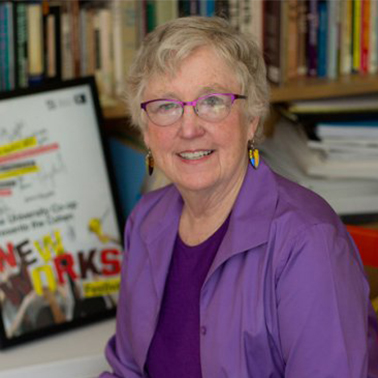
Suzan Zeder is one of the nation’s leading playwrights of plays for young and family audiences. Her work has been seen in all fifty states and has been produced and published in Great Britain, Germany, Australia, Japan. Israel, and Switzerland. She is the four time winner of the Distinguished Play award from the American Alliance of Theatre and Education, most recently in 1999 for her play The Taste of Sunrise. She has chaired the Playwright’s Fellowship panel for the National Endowment for the Arts and Theatre Communications Group. In 1997 she was inducted into the College of Fellows of the American Theatre. Most recently she has written the book and additional lyrics for a major musical, Time Again in Oz, co-produced by Seattle Children’s Theatre and The University of Texas at Austin’s Department of Theatre and Dance.
Tags:

Melissa Jesser is making her debut with Underground Railway Theater at Central Square Theater. Previous credits include: The Seagull (Huntington Theatre Company: Elliot Norton Award- Best Ensemble), Chosen Child (Boston Playwrights’ Theatre), and The Hobbit (Wheelock Family Theatre). She has also appeared with Science Fiction Theatre Company, Hibernian Hall, and The Footlight Club. Currently, Melissa spends her mornings performing Romeo and Juliet, Macbeth, and A Midsummer Night’s Dream for schools across New England with Shakespeare Now! Melissa can next be seen in The Flick at Gloucester Stage Company this August and September. She holds a BFA in Acting from Emerson College and studied at Interlochen Arts Academy. www.melissajesser.com
Tags:
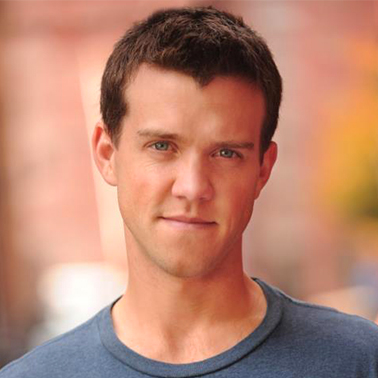
Jordan Ahnquist is making his debut with Underground Railway Theater at CST, and with the Catalyst Collaborative@MIT in this world premier of Mr g. Jordan has worked with Speakeasy Stage Company, The Lyric Stage Company, New Repertory Theatre, Stoneham Theatre, Milwaukee Repertory Theatre, Utah Shakespeare Festival, Montana Shakespeare in the Parks, and The Gamm theatre, among others. He can often be found in the long running comedy Shear Madness at the Charles Playhouse. Some favorite credits include Hamlet, Big River (IRNE nom), Heartbreak House, Tartuffe, and Anything’s Dream. Jordan holds a BA in theatre from Muhlenberg College.
Tags:
Renato Luna Dezonne has worked with CST on several productions, including URT’s A Disappearing Number and Brundibar and But the Giraffe! as well as The Nora’s Emilie. He also works with URT’s Youth Underground, Summer Stage, and Underground Players. Renato is a graduate of Emerson College, with a BFA in the stage and production management program.
Tags:
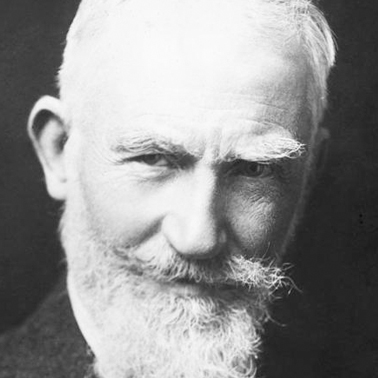
George Bernard Shaw (1856-1950) was born in Dublin, the son of a civil servant. His education was irregular, due to his dislike of any organized training. After working in an estate agent’s office for a while he moved to London as a young man (1876), where he established himself as a leading music and theater critic in the eighties and nineties and became a prominent member of the Fabian Society, for which he composed many pamphlets. He began his literary career as a novelist; as a fervent advocate of the new theatre of Ibsen (The Quintessence of Ibsenism, 1891) he decided to write plays in order to illustrate his criticism of the English stage. His earliest dramas were called appropriately Plays Pleasant and Plays Unpleasant (1898). In his later plays, discussion sometimes drowns the drama such as with Back to Methuselah (1921). Even so, this was the time period he worked on his masterpiece Saint Joan(1923), in which he rewrites the well-known story of the French maiden and extends it from the Middle Ages to the present. The Doctor’s Dilemma (1906), facetiously classified as a tragedy by Shaw, is really a comedy the humor of which is directed at the medical profession. Candida (1898), with social attitudes toward sex relations as objects of his satire, and Pygmalion (1912), a witty study of phonetics as well as a clever treatment of middle-class morality and class distinction, proved some of Shaw’s greatest successes on the stage. It is a combination of the dramatic, the comic, and the social corrective that gives Shaw’s comedies their special flavor. Shaw’s complete works appeared in thirty-six volumes between 1930 and 1950, the year of his death.
Tags: